It can be said that nowadays, there are many treatment options to lift, tighten, and restore the skin to be smooth, firm, and look younger than ever. Each method has its own distinct strengths and delivers different treatment results. One of the treatments that helps reverse skin aging deep down to the cellular level—which is highly famous and has a long history of therapeutic use—is stem cell (Stem Cell) injection, utilizing the "cell therapy" approach. What is a Stem Cell injection? Is it safe and does it really yield good results? LINNA Clinic has compiled 8 key facts you should know before getting a stem cell (Stem Cell) injection to serve as a guide for everyone's decision-making in this article.
What is a Stem Cell
First, let's begin by explaining that our bodies are composed of over 100 trillion tiny cells. These cells group together to form various organ systems in the body, allowing us to live, such as muscle cells, skin cells, nerve cells, cardiac muscle cells, red blood cells, white blood cells, etc.
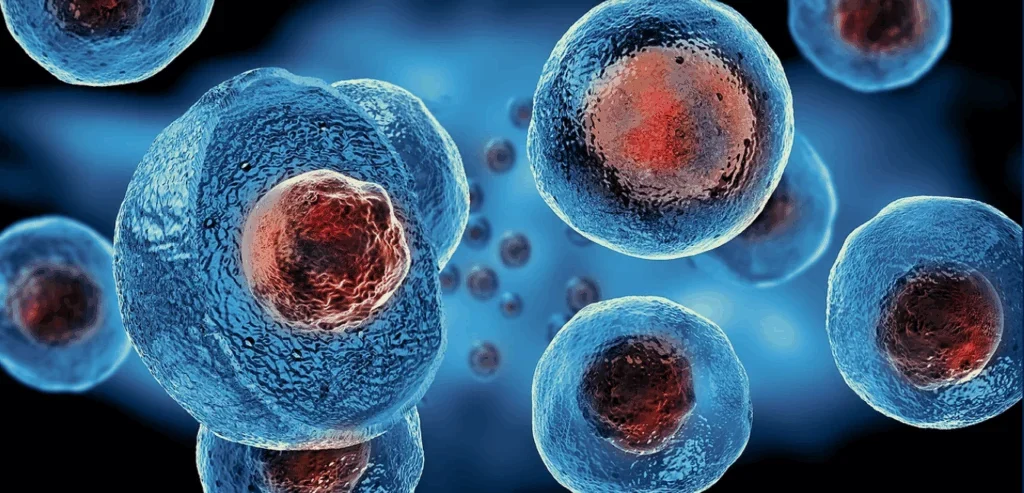
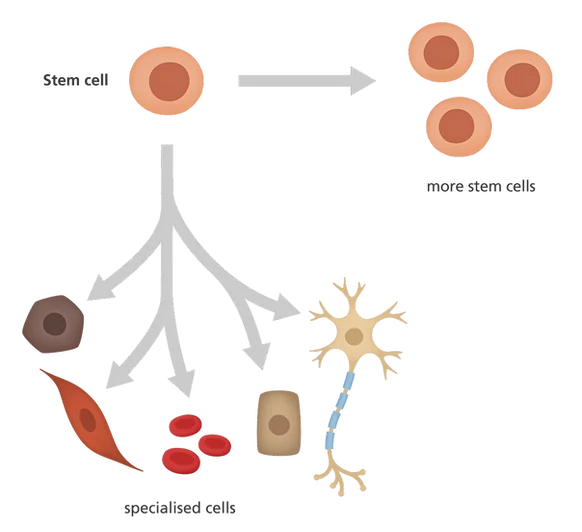
A stem cell (Stem Cell) is the progenitor cell of a living organism, categorized as an embryonic/undifferentiated cell that does not yet have a specific function and can divide indefinitely. Later on, stem cells can develop into other types of cells, such as muscle cells, cardiac muscle cells, nerve cells, bone cells, etc. The primary function of stem cells is to develop and differentiate themselves into various cells to replace deteriorated and dead cells, enabling different systems within the body to function normally. Stem cells can be classified into 3 types based on their developmental potency:
- Totipotent Stem Cell is a progenitor cell derived from embryos. It has the highest potential and can develop into any type of cell.
- Pluripotent Stem Cell is a cell derived from adult stem cells (Adult Stem Cells) that can still develop into many other types of cells.
- Multipotent Stem Cell/Unipotent Stem Cell is a cell derived from adult stem cells (Adult Stem Cells) but is a cell with a specific, determined function and cannot develop into other types of progenitor cells.
Where Do Stem Cells Come From?
Stem cells are inherently substances that already exist inside our bodies. Various cells within our bodies constantly deteriorate, die, and are replaced by new cells. The new cells that replace the old, dead cells are indeed stem cells. However, as we age or when the body is affected by various illnesses, the rate of new cell production decreases significantly compared to the number of dying cells. As a result, the body begins to deteriorate rapidly. Thus, the concept of using stem cells to restore body cells back to their normal function was born.
Currently, stem cells used in medicine come from various sources, such as:
- Receiving stem cells from our own body (Autologous)
- Receiving stem cells from another person's body (Allogeneic)
- Receiving stem cells from animals (Xenotherapy), such as PDRN from salmon
In the beauty industry, the concept of repairing cells with stem cells has also been applied to address skin concerns by using progenitor cells within the body called Mesenchymal Stem Cells (MSCs) to treat and restore the skin to look youthful and firm once again. MSCs are stem cells that have the ability to divide and develop freely into various cells in the body, including skin cells, fat cells, bone/cartilage cells, and other specific cells. The sources of MSCs include the umbilical cord, fat, placental blood, bone marrow, and teeth. At LINNA Clinic, we also choose to use MSC stem cells to treat and restore the skin down to the DNA level for our patients.
Is a Stem Cell Injection Dangerous?
Most stem cell injections in the beauty industry utilize MSCs. This type of progenitor cell is undifferentiated (does not yet have a specific function); therefore, when injected into the skin layer, it does not trigger a rejection response from the immune system. Injecting this type of stem cell is thus highly safe and widely popular. However, you must choose stem cells from quality, certified sources that are most suitable for you, and the treatment should be performed by an experienced physician to enhance treatment safety. At all branches of LINNA Clinic, we are ready to provide high-quality MSC stem cell injections. Every step is supervised and performed by specialized physicians. Therefore, you can fully trust the safety and results after receiving MSC stem cell injections at LINNA Clinic.
Where Do MSCs Come From and How Do They Help?
MSC stem cells (Mesenchymal Stem Cells) are progenitor cells of cells in the body that can divide and develop into many different cells in the body. Sources of MSC stem cells include the umbilical cord, fat, blood, placental blood, bone marrow, and teeth. They can be either autologous (our own) or allogeneic (received from another individual). The MSCs used in the beauty industry have properties that help address skin concerns as follows:
- MSC stem cells will replace the original dead skin cells, helping to repair and restore the skin and skin cells to become strong again.
- Help reduce wrinkles and fine lines, and heal wounds and inflammation in the skin layer.
- Increase fibroblasts (Fibroblast) in the skin layer, which are cells responsible for producing collagen and elastin, making the skin look more elastic, tight, and smooth.
- Help stimulate the function of growth factors (Growth Factor) and cytokines (Cytokines) in the body, prompting the skin to produce more collagen.
At What Age Can You Get Stem Cell Treatments?
- Stem cell (Stem Cell) injections are suitable for individuals aged 35 and above, particularly those with weak, fragile skin who wish to restore their skin down to the cellular level, or those who have previously undergone other skin treatments but did not see satisfactory results.
Are There Any Effects from Using Someone Else's Stem Cells?
In cases where MSC stem cells are received from another donor for skin care, it remains a safe method. This is because MSCs are undifferentiated progenitor cells that can develop and transform into other cells freely. The stem cell donor must undergo health screening beforehand and must not have any infectious diseases or other dangerous medical conditions. After that, the obtained stem cells are cultured and expanded in a clean, certified laboratory. These stem cells must undergo quality, characterization, and safety checks again before being injected into the recipient. Therefore, you can rest assured that receiving MSC stem cells from another donor is highly safe.
How Long Do the Results of Stem Cell Injections Last?
Within the first 1-4 weeks after a stem cell injection, you will begin to see changes in the skin; it will look firmer, tighter, and wrinkles will appear faded. The treatment results can last for 3-12 months. However, this depends on individual skin conditions and post-treatment self-care after the stem cell (Stem Cell) injection.
How to Care for Yourself Before and After a Stem Cell Injection
For the best results after a stem cell (Stem Cell) injection, recipients should care for themselves before and after the injection as follows:
Preparation Before a Stem Cell Injection
- Get enough rest, sleeping at least 8-12 hours before receiving the injection.
- If you have any underlying medical conditions or take regular medications, inform your doctor in detail before undergoing treatment.
- Avoid greasy or fried foods for about 2-3 days before and after the injection.
- Avoid other cosmetic procedures, such as lasers, liposuction, or chelation therapy, for at least 1-2 weeks both before and after the stem cell (Stem Cell) injection.
Post-Treatment Care After a Stem Cell Injection
- After the injection, avoid traveling to places with a high risk of infection, such as hospitals, clinics, crowded areas, etc., for at least 3 days.
- Avoid strenuous activities, such as vigorous exercise or heavy physical labor, for at least 1-2 days after the injection.
- Avoid outdoor activities and stay away from sunlight, pollution, and dust/smoke for at least 1-2 days after the injection.
- After the Stem Cell injection, you may feel sleepier than usual. It is recommended to drink plenty of water or sweetened beverages to boost energy.
Summary
At LINNA Clinic, we are ready to provide high-quality placenta-derived Stem Cell MSCs injection services, guaranteed for safety and high standards, to help restore skin cells from the inside out, strengthen the skin layers, and reveal plump, healthier-looking skin than ever before. Every case is supervised and treated by our team of medical specialists. If you are interested in receiving Stem Cell MSCs injections by medical specialists, you can add Line @linnaclinic to discuss and consult for initial details before the Stem Cell injection, or book an appointment for treatment at LINNA Clinic.
この記事はLINNA Clinicの医療チームが編集・監修しています。
このプログラムにご興味がありますか?個別のご相談も承ります
LINNA Clinicのチームが、あなたに最適なプログラム選びをお手伝いします。