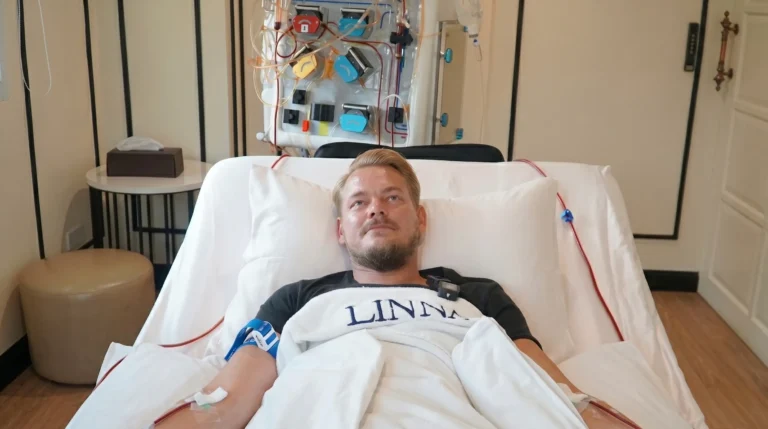

Autoimmune Disease refers to a group of conditions caused by abnormalities in the immune system. Normally, the immune system protects the body by destroying bacteria, viruses, and foreign substances. However, in autoimmune conditions, the immune system mistakenly attacks the body’s own cells, tissues, and organs. This can lead to cellular damage, chronic inflammation, and dysfunction in various systems of the body.
Although there are currently treatment approaches that help control the severity of autoimmune diseases through medication, some patients may still have concerns about potential long-term side effects. As a result, new approaches have been developed to support deeper health restoration from within.
One innovation that has gained increasing attention is Exosome Therapy, which is being continuously studied for its potential role in supporting immune balance, reducing chronic inflammation, and promoting the body’s natural recovery processes. What is Exosome Therapy? What can it help with, and what should you know before deciding to undergo the treatment? LINNA Clinic has gathered all the key information you should know in this article.
Table of Contents

What is Autoimmune Disease, and why does the immune system attack the body itself?
Autoimmune Disease refers to a condition in which the body’s immune system malfunctions and mistakenly attacks its own cells, tissues, and organs. This can lead to tissue damage and chronic inflammation in the body, contributing to various diseases such as systemic lupus erythematosus (SLE), rheumatoid arthritis, psoriasis, multiple sclerosis, inflammatory bowel disease, Sjögren’s syndrome, autoimmune thyroid disease, and type 1 diabetes.
The symptoms may vary depending on which tissues or organs are affected.
At present, the exact cause of autoimmune conditions is still not fully understood. However, they may develop from multiple contributing factors, such as genetics, sex, hormones, stress, infections, exposure to chemicals, and environmental factors.
In terms of treatment, there is currently no definitive cure for autoimmune diseases. Treatment mainly focuses on controlling symptoms through medications such as immunosuppressants and corticosteroids, which help reduce inflammation and relieve disease severity. This can help patients maintain a better quality of life and carry out daily activities more comfortably.
However, there has been growing interest in the concept of supporting immune balance and tissue restoration from within through Exosome Therapy. This approach aims to support cell-to-cell signaling, helping the body’s cells function in a more balanced way. It may also help reduce excessive immune cell responses, which are one of the key mechanisms involved in autoimmune conditions.
This approach should be carried out under the supervision of an experienced physician, with a thorough health assessment and a personalized recovery plan tailored to each individual.
What is Exosome Therapy?
Exosome Therapy is a regenerative medicine approach that uses purified exosomes that have been properly isolated and prepared before being administered into the body through intravenous infusion (IV Therapy) or targeted injection, depending on the physician’s assessment.
This therapy aims to support cellular repair, reduce inflammation, and stimulate the body’s natural recovery processes.
Exosomes are nano-sized particles, approximately 50–200 nanometers in size, with a spherical vesicle-like structure. They are released by various types of cells, particularly mesenchymal stem cells (MSCs), which are cells known for their regenerative potential and can be found in several tissues, such as the umbilical cord, bone marrow, adipose tissue, and dental tissue. Exosomes play an important role in cell-to-cell communication.
Inside each exosome, there are more than 1,000 types of bioactive molecules, such as proteins, lipids, growth factors, coenzymes, mRNA, and miRNA. These components play an important role in supporting tissue repair, helping reduce chronic inflammation, and contributing to better regulation and balance of the body’s immune system.
How is Exosome Therapy different from Stem Cell Therapy?
Although Exosome Therapy and Stem Cell Therapy are both categorized under regenerative medicine, their concepts and mechanisms of action are clearly different.
-
- Stem Cell Therapy involves introducing living stem cells into the body. These stem cells have the ability to divide and develop into various specialized cell types, such as nerve cells, muscle cells, blood cells, and skin cells.
This helps support tissue regeneration and repair across multiple systems of the body. - In contrast, Exosome Therapy involves increasing the amount of exosomes in the body. Exosomes are nano-sized particles that cells use to communicate with one another, and unlike Stem Cell Therapy, this approach does not involve the use of living cells.
The main purpose of Exosome Therapy is to enhance cell-to-cell communication signals, helping various cells, including immune cells, function in a more balanced way. It may also support the restoration and repair of damaged tissues, while helping reduce inflammation within the body.
- Stem Cell Therapy involves introducing living stem cells into the body. These stem cells have the ability to divide and develop into various specialized cell types, such as nerve cells, muscle cells, blood cells, and skin cells.
Benefits of Exosome Therapy for Supporting Recovery in Autoimmune Conditions
Exosome Therapy is another regenerative medicine approach that has been gaining increasing attention, especially among individuals with autoimmune conditions, due to its notable potential benefits as follows:
-
- Helps support immune system balance
Autoimmune conditions are often associated with abnormalities in key immune cells, such as T cells and B cells, which play an important role in the body’s response to foreign substances. Exosomes are involved in cell-to-cell communication and signaling, and may therefore help support more balanced and appropriate immune system function. - Helps reduce chronic inflammation in the body
Research has found that exosomes may help reduce the release of inflammatory cytokines, such as TNF-α and IL-6, while supporting anti-inflammatory cytokines, such as IL-10. Therefore, exosomes may help reduce chronic inflammation, which is commonly found in individuals with immune-related disorders. (Samavati et al., 2024) - Supports tissue recovery and repair processes
Exosomes contain various bioactive molecules, such as growth factors, proteins, and microRNA, which play a role in cell-to-cell communication and help create a tissue environment that is more suitable for recovery.
As a result, exosomes may help support the repair of tissues affected by chronic inflammation, such as joints, skin, or certain organs in the body. (Hu et al., 2022) - A cell-free regenerative approach with a favorable safety profile
Exosome Therapy is considered a form of Cell-Free Therapy because it does not directly use living cells. Instead, it uses exosomes, which are nano-sized particles secreted by cells. This may help reduce concerns related to abnormal cell division or the risk of cellular mutation and tumor formation.
However, the safety standards of Exosome Therapy still depend on several important factors, including the source of the exosomes, the production process, storage standards, and the expertise of the physician providing the treatment. - Helps support overall quality of life
When inflammation decreases and the body’s internal balance improves, some individuals may notice positive changes after the therapy, such as improvement in chronic fatigue, feeling more refreshed, having more energy, and sleeping more deeply.
These changes can contribute to better overall quality of life. However, results may vary from person to person depending on several factors.
- Helps support immune system balance
Which types of autoimmune diseases can Exosome Therapy help support recovery for?
At present, exosomes are being studied in various autoimmune conditions, such as:
- Systemic Lupus Erythematosus (SLE), commonly known as lupus
- Rheumatoid Arthritis, a chronic inflammatory joint condition that can cause joint pain, joint damage, and joint swelling
- Psoriasis
- Sjögren’s Syndrome, a condition in which the immune system attacks the tear glands and salivary glands, causing dry eyes and dry mouth
- Multiple Sclerosis (MS)
- Type 1 Diabetes Mellitus (T1DM)
However, this approach still requires further studies to reach clearer conclusions regarding its long-term effectiveness and safety.
For individuals with autoimmune conditions, the decision to undergo Exosome Therapy for body recovery should be made only under close supervision of an experienced physician.
Who should avoid Exosome Therapy?
Individuals with the following conditions should avoid Exosome Therapy, or have their suitability carefully assessed by a physician before deciding to undergo the procedure.
- Individuals with an acute infection
- Pregnant or breastfeeding women.
- Individuals with uncontrolled or severe underlying medical conditions
- Individuals with a history of allergy to certain substances
- Individuals who are currently undergoing treatment for certain types of cancer
- Individuals who are taking high-dose immunosuppressive medications, as their suitability should be assessed on a special case-by-case basis
Is Exosome Therapy dangerous? Are there any side effects?
In general, Exosome Therapy is considered a safe procedure when performed under the supervision of an experienced physician and when using products that have been properly controlled according to appropriate quality standards.
Most clients may feel more refreshed and energized after the treatment. Some may also notice a reduction in inflammation or body aches in different areas.
However, some individuals may experience mild side effects, such as irritation at the injection site, fatigue, or slight discomfort.
These symptoms are usually temporary and may improve on their own within approximately 3–5 days, especially with adequate rest and increased water intake.
How many sessions of Exosome Therapy are needed, and how many months do the results last?
The number of sessions and how long the results of Exosome Therapy may last can vary from person to person, depending on individual health conditions, as well as the quality and amount of exosomes used in each session.
When high-quality exosomes are used in an amount that is appropriate for the body’s needs, based on the physician’s assessment, the results may last from 3 months up to 1 year. Results may vary depending on each individual.
Based on LINNA Clinic’s experience, more than 80% of clients who received high-quality exosomes in an appropriate amount were able to notice changes within a few weeks after the first session, such as feeling more refreshed, sleeping better, recovering more efficiently, and gradually experiencing reduced body aches or inflammation in certain areas.
In cases where results appear more slowly or do not last as long, leading to more frequent repeat sessions, this may be related to several factors. These may include an unsuitable quality or amount of exosomes used, a significant underlying disease condition or accumulated inflammation in the body, or not following the physician’s recommendations properly.
How to take care of yourself before and after Exosome Therapy
Before Exosome Therapy
- Get adequate rest for at least 6–8 hours.
- Drink at least 1.5–2 liters of clean water to help prevent dehydration after the treatment.
- Inform the physician in detail about your health history, underlying medical conditions, and any medications or supplements you are currently taking.
- Avoid alcohol and smoking for 3–7 days before the treatment.
- If you have a fever or feel unwell, please inform the clinic in advance so the appointment can be postponed until you have fully recovered.
After Exosome Therapy
- Avoid squeezing, massaging, or applying strong pressure to the injection site to help prevent inflammation and infection.
- Drink 1.5–2 liters of clean water per day and choose nutritious foods.
- Get adequate rest and avoid strenuous activities or heavy exercise for at least the first 1–2 weeks.
- Avoid alcohol consumption and smoking for at least 1 week
- Avoid activities that increase body heat, such as facial massage, sauna, steam room, hot bath, or laser treatments, for at least the first 48 hours.
- Attend your follow-up appointment as scheduled. If you experience any unusual symptoms, such as severe pain, excessive swelling or redness, shortness of breath, extreme fatigue, or a high fever, please seek medical attention immediately.
Summary
Exosome Therapy is another innovation in regenerative medicine that has been gaining widespread attention. With its ability to act as a cellular-level biological messenger, it may help support immune system balance, reduce chronic inflammation, and promote the body’s recovery from within.
For this reason, Exosome Therapy is being continuously studied in individuals with autoimmune conditions, also known as Autoimmune Disease, as well as other chronic health conditions.
However, Exosome Therapy for body restoration is still under ongoing study to reach clearer conclusions regarding its long-term effectiveness and safety. Those who are interested in this approach should consult an experienced physician to assess potential risks and design a personalized care plan that is appropriate for their individual condition.
If you are looking for an approach to support body recovery from autoimmune conditions, Autoimmune Disease, or Exosome Therapy to help restore the body and support internal balance, LINNA Clinic is ready to provide consultation by our medical team.
We offer personalized health assessments and design care programs tailored to each individual’s health goals. For consultation, please contact us at 063-609-8888, WhatsApp +66 919799554, or LINE: @linnaclinic.
References
- Samavati, S. F., Yarani, R., Kiani, S., HoseinKhani, Z., Mehrabi, M., Levitte, S., Primavera, R., Chetty, S., Thakor, A. S., & Mansouri, K. (2024). Therapeutic potential of exosomes derived from mesenchymal stem cells for treatment of systemic lupus erythematosus. Journal of Inflammation, 21:20. https://doi.org/10.1186/s12950-024-00381-2
- Hu, J. C., Liu, Z. S., Tang, S. L., & He, Y. M. (2022). Mesenchymal stem cell-derived exosomes: A novel therapeutic strategy for skin wound healing and regeneration. World Journal of Stem Cells, 14(5), 318–329. https://doi.org/10.4252/wjsc.v14.i5.298